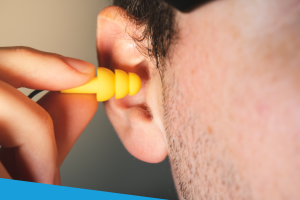
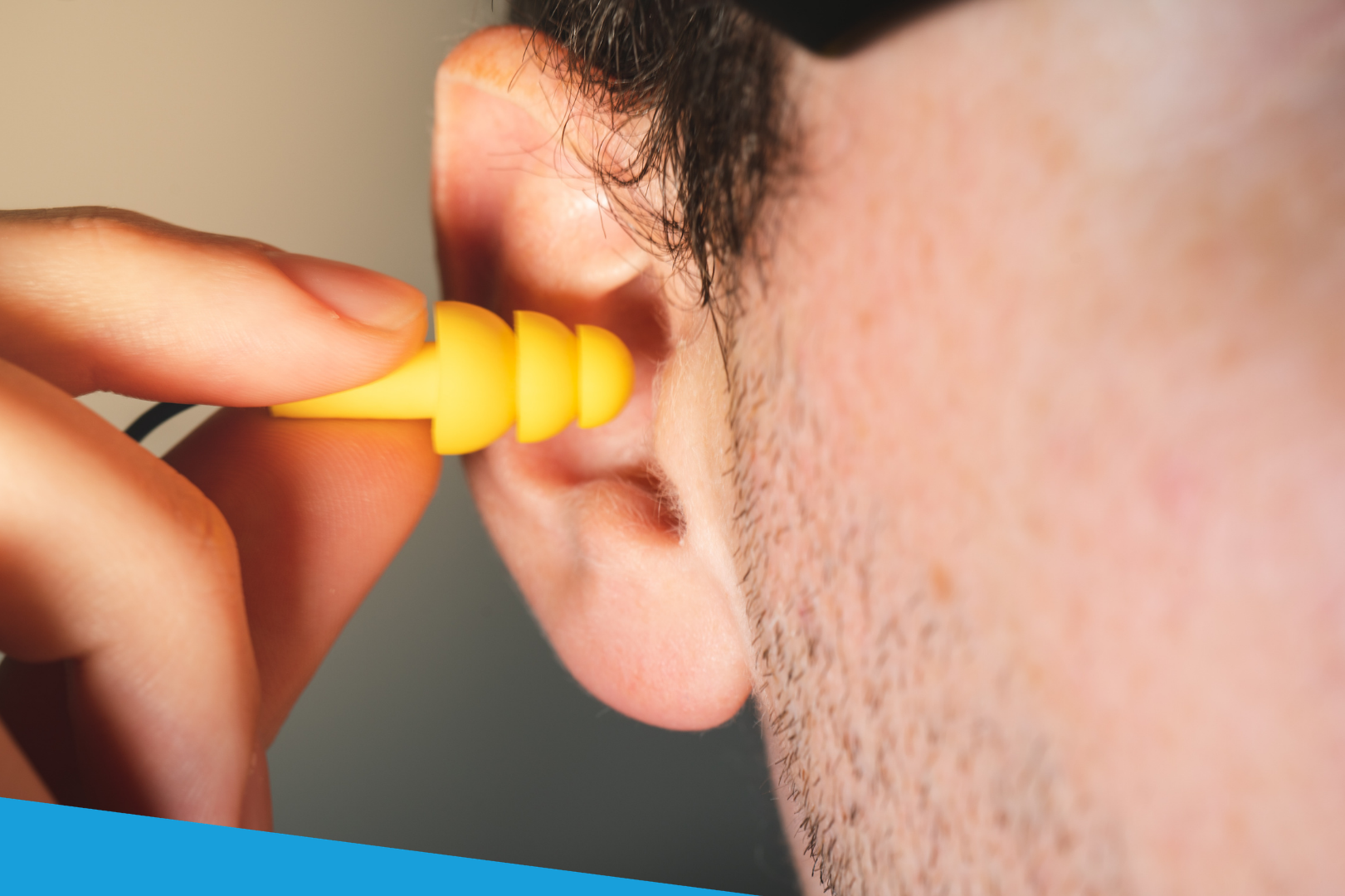
Earplugs: How to choose the right hearing protection for your workplace


In an industrial environment, noise is often part of everyday work. Machinery, production equipment, pneumatic tools, saws, compressors and material handling operations can expose workers to significant noise levels.
Repeated exposure to noise can have irreversible effects on hearing. That is why choosing the right hearing protection is an important step in preventing workplace hazards.
But how do you determine which type of earplug to use? What level of noise reduction should you look for? And how can you tell whether an earplug actually provides sufficient protection?
Here are the main factors to consider when choosing the right protection for your work environment.
Before choosing an earplug: know your exposure level
Choosing hearing protection should begin with an assessment of the noise level workers are exposed to and the duration of their exposure.
Noise exposure limits are generally established based on two factors: noise level and exposure duration. As noise levels increase, the permissible exposure duration decreases.
In Quebec, the noise exposure limit is 85 dBA for an 8-hour period, with a 3 dBA exchange rate. This means that for every 3 dBA increase, the permissible exposure duration is cut in half*. For more details on exposure limits, visit : https://www.cchst.ca/oshanswers/phys_agents/noise/exposure_can.html
Source: Canadian Centre for Occupational Health and Safety (CCOHS), Noise Exposure Limits in Canada.
Which type of earplug should you choose?
In environments where hearing protection is required, earplugs are a practical and versatile option.
They are available in different formats, including:
- Foam earplugs;
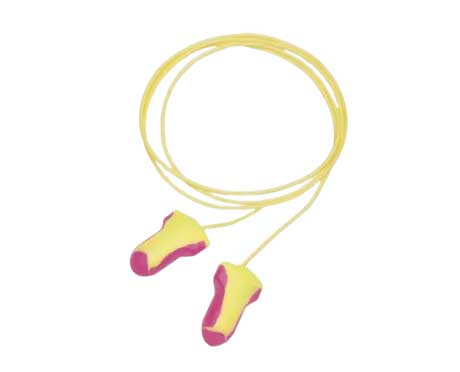
- Corded foam earplugs;
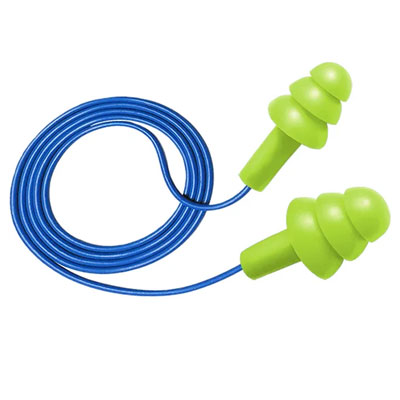
- Pre-molded and reusable earplugs;
The right choice depends on factors such as noise level, duration of use, desired comfort and the specific requirements of the workstation.
|
|
Earplug types |
Advantages |
Recommended applications |
NRR |
Carrousel product codes |
|
|
Foam earplugs |
Lightweight Easy to distribute |
|
29-33 |
9203512, 9203561, 9203562, 9203510, 9203513, 9203511, 9203525, 9203560, 9203536 |
|
|
Corded earplugs |
Practical when users need to remove their hearing protection regularly |
|
25-33 |
|
|
|
Pre-molded earplugs |
Reusable Easy to insert |
|
25-33 |
|
|
|
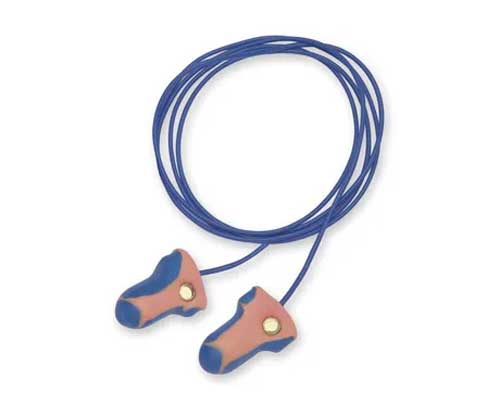
Metal-detectable earplugs |
Detectable by metal detectors |
|
32 |
Understanding the Noise Reduction Rating: NRR
When shopping for earplugs, you have likely noticed the NRR, or Noise Reduction Rating. This rating provides an indication of the noise attenuation capability of your hearing protection.
To ensure that this rating provides the most reliable indication possible, make sure that:
- The protection is appropriate for the actual noise level
- They are properly inserted and fitted, particularly when combined with other PPE
To estimate the actual attenuation provided by your earplugs in your work environment, you can refer to the method presented by CCOHS: https://www.cchst.ca/oshanswers/prevention/ppe/ear_prot.html#section-6-hdr
According to this method, earplugs are considered to achieve 50% of their stated NRR when calculating exposure in dBA.
Let’s consider an environment where the time-weighted average exposure is 98 dBA and the earplug being used has an NRR of 29 dB.
The calculation presented by CCOHS is:
98 − [29 × (0.5) − 3] = 86.5 dBA
The estimated exposure after using the earplug is therefore approximately 87 dBA, after rounding.
It is important to have a good understanding of your work environment, particularly your actual exposure level, in order to choose earplugs with an NRR appropriate for your situation.
Our other available solution: earmuffs
Earplugs are not the only option available.
Earmuffs can be a practical alternative when noise exposure is intermittent, as they are easier to remove and put back on.
Here are some examples of applications where earmuffs may be preferred over earplugs:
- Landscapers and groundskeepers: intermittent use of lawn mowers, blowers, hedge trimmers or brush cutters. Earmuffs are easy to remove between tasks.
- Heavy equipment operators: when they need to alternate between operating machinery and performing tasks outside the equipment.
- Construction workers: when moving between a noisy task and a quieter task and needing to remove their hearing protection regularly.
- Workers who use noisy tools occasionally: for example, a drill, saw or grinder used only during certain stages of a task.
- Workers who have difficulty properly fitting earplugs: earmuffs may be easier to position correctly.
In some situations, dual protection, meaning earplugs combined with earmuffs, may be necessary.

Properly Adjusting Your Hearing Protection
Even an earplug with good attenuation capabilities will not be effective if it is not properly fitted.
Here are a few steps that can help you use them properly :
- Roll the earplug between your fingers to compress it.
- Gently pull the top of your ear back to straighten the ear canal.
- Insert the earplug.
- Hold it in place for a few seconds to allow it to return to its original shape.
If you experience significant discomfort or have difficulty inserting the earplug properly, it is best to report it and choose another solution that is better suited to you.
Finding the Right Balance Between Protection and Real-World Conditions
Choosing earplugs is therefore not simply a matter of selecting the product with the highest NRR.
Your choice should take into account :
- Your actual work environment, including the noise level and duration of exposure
- The type of work and the level of comfort required (whether the protection needs to be removed regularly or not)
- Your comfort
Taking the time to assess these factors increases the likelihood that the protection you choose will truly be suited to you, your employees and your work environment.
-

-

-

-

-

-
 PINK AND BLUE CORDED DISPOSABLE DETECTABLE FOAM EARPLUG "LT30"100 per box$76.90
Your negotiated price
-

-

-

-

-

-

-
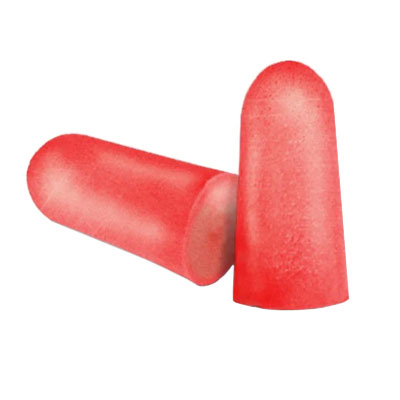
 "Hush™" FLUORESCENT RED POLYURETHANE EARPLUG CORDLESS NNR33200 per box$28.16
Your negotiated price
-


Need Help Choosing the Right Hearing Protection?
Our team can help you find products suited to your needs. Discover our hearing protection solutions or contact us today!