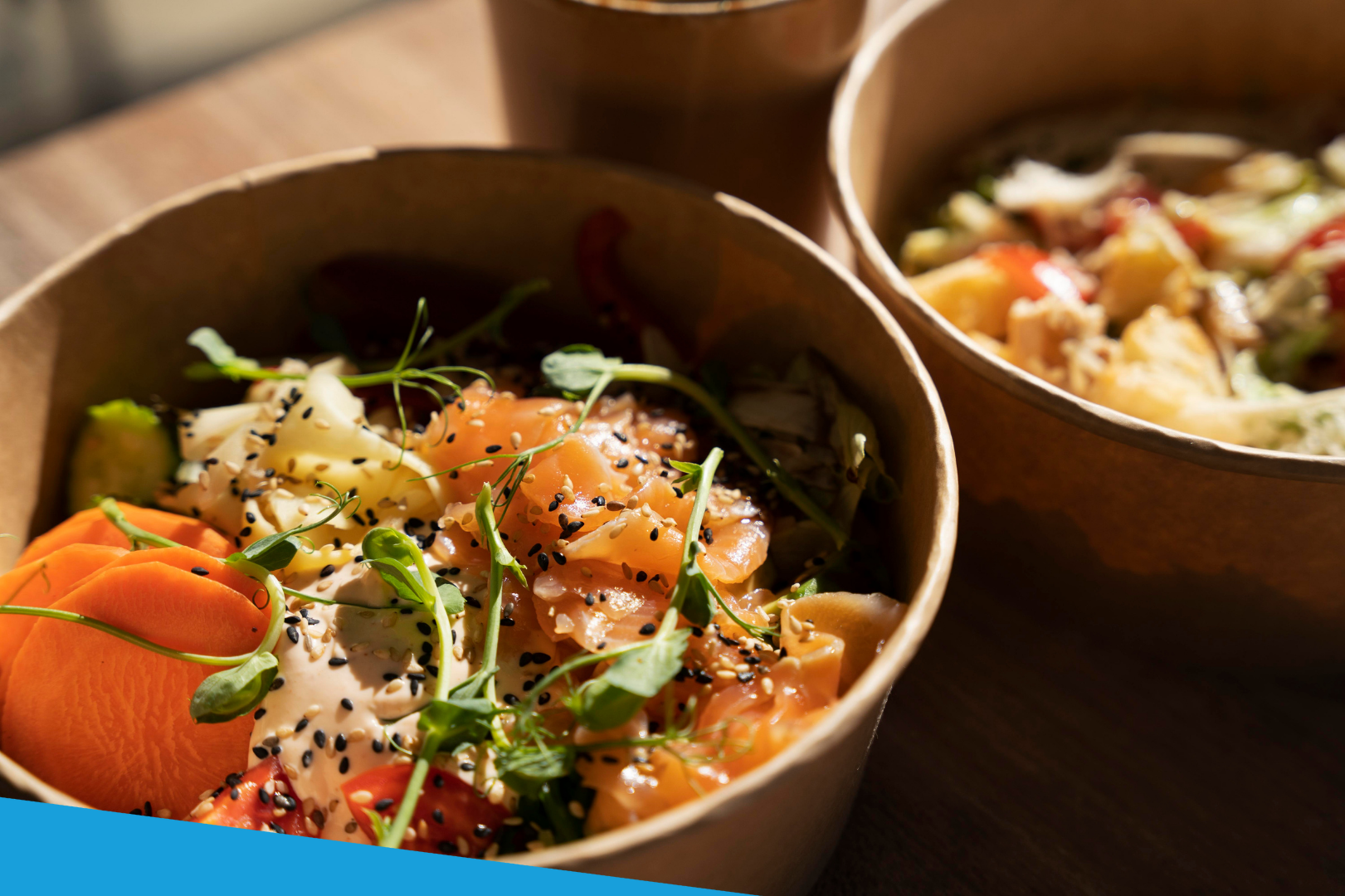
Which take-out containers should you choose based on your dishes, needs, and operating environment?


Take-out and food delivery are now an integral part of daily operations for many restaurants, caterers, and foodservice businesses. Yet one key element is often underestimated, despite its major impact on food quality, customer satisfaction, and brand image: the container.
Choosing the right food packaging goes far beyond selecting the right size. It requires careful consideration of the type of food, temperature, transportation method, and environmental factors. In this guide, we review the main types of take-out containers and help you determine which options best suit your operational needs.
Why is choosing the right take-out container so important?
An ill-suited container can lead to leaks, heat loss, altered texture, or an unappealing presentation upon arrival. Conversely, the right container helps to:
- Preserve food quality and freshness
- Facilitate transport and delivery
- Improve the customer experience
- Optimize operational costs
- Meet growing environmental expectations
Packaging is therefore a core component of your food offering and, more broadly, of your brand identity
Which take-out container should you choose based on the type of food?
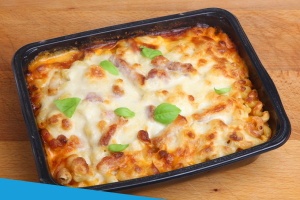
For hot meals (pasta, prepared dishes, stir-fries)
Hot foods require containers that are heat-resistant and capable of maintaining temperature without warping.
Recommended containers:
- Paperboard containers with inner coating
- Aluminum containers, versatile, recyclable, and cost-effective
- Molded fiber (bagasse) containers, suitable for foods with limited liquid content
- Plastic (MFPP) containers, microwave-safe and highly durable
These solutions strike a good balance between durability, insulation, and practicality.
For soups, broths, and saucy dishes
Leak resistance is critical here, especially for delivery.
- Plastic bowls with matching lids: designed for optimal leak prevention, available in smaller quantities, and dishwasher-safe.
- Paper soup bowls specifically designed for liquids
Beyond the bowl itself, the lid plays a key role in overall performance—especially for hot liquids. Steam management becomes essential for both transport safety and product quality at opening.
Vented lids:
- Allow steam to escape effectively
- Reduce condensation inside the container
- Help preserve food quality
- Minimize the risk of burns when opening
Non-vented lids may be suitable in very specific cases (for example, when soup has cooled sufficiently before sealing or during long transport times). However, for most professional foodservice applications, vented lids remain the most reliable option.
A properly fitted lid helps prevent spills during transport and ensures a hassle-free customer experience.
For cold dishes and salads
Cold foods benefit from packaging that enhances presentation while preserving freshness.
Recommended containers:
- Clear PET containers
- Salad bowls with lids for composed salads
Transparency highlights the product, encourages purchase, and makes content identification easier.
| Our pro tip: Portion cups are ideal for sauces, but they are also perfect for separating dry ingredients you want to protect from moisture, such as croutons, nuts, or dried fruits. |
For desserts and pastries
Dessert require containers that protect both shape and presentation
Recommended containers:
- Clear PET dessert containers
- Paperboard pastry boxes
- Domed containers for decorated desserts
Proper protection is essential to prevent damage during transport.
For fried foods (fries, wings, tempura)
Tne main challenge with fried foods is managing grease and moisture. Wrong packaging can quickly lead to sogginess, loss of crispness and disappointing customer experience.
Beyond shape and ventilation, the type of coating applied to paperboard of paper plays a crucial role in both performance and environmental impact.
Traditionnally, some fried food packaging relied on PFAS-based coating to provide grease resistance. However, these substances are now a growing environmental concern due to their persistence and low degradability.
As a result, water-based coatings have emerged as a more responsible alternative. Free from fluorinated substances, they help limit grease migration while improving moisture control while improving moisture control. While performance may vary depending on food type and usage duration, these coating effectivelu meet the needs of most quick-service and foodservice applications.
Recommended containers:
- Ventilated paperboard boxes
- Grease-resistant food wraps
These solutions help preserve crispness and reduce condensation.
Choosing take-out containers based on the usage environment
For delivery
Delivery introduces additional constraints such as handling, stacking and transport time.
Containers must be:
- Leak-proof
- Sturdy
- Stackable
- Fit into delivery bags
The right packaging choice reduces complaints and product loss.
For take-out and counter service
In fast-paced service environments, ease of use is essential.
Choose containers that are:
- Easy to open and close
- Quick to assemble
- Simple to store
This helps optimize service speed and kitchen efficiency.
For catering and events
High volumes require convenient and economical solutions.
Opt for:
- Standard sizes that stack easily
- Sturdy containers
- High-volume purchase
Plastic, paperboard, bagasse, aluminum. What’s the difference?
Each material offer specific advantages depending on use.
- Paperboard: lightweight and visually appealing, paperboard has gained popularity in response to environmental concerns.Todays's paperboard offer excellent resistance to grease and moisture making them a strong alternative to plastic and PFAS-coated packaging.
- Aluminum: infinitely recyclable, durable and cost effective, an ideal option that combines performance, cost optimization and reduce environmental impact.
- Bagasse: made from natural fibers, it offers good rigidity and its suitable for hot foods. This material performs well in short distribution cycles, where plastic may be overkilled for the actual use.
The right choice depends on your operational and environmental priorities.
How to choose the right take-out container
Before selecting your packaging, ask the right questions:
- What type of food will be pacakged?
- Is it hot or cold?
- Will it be delivered?
- What is the average transport time?
- What are you budgetary and environmental constraints?
A simple analysis can often prevent costs mistakes.
Choosing the right material final use
When serving foodservice professionals, this strategic question is essential: is the chosen material truly suited to the containers's final use?
A take-out container is designed to protect food for very short period, often just minutes, sometimes few hours, between the kitchen and the consumer. Offering a solution with a lifespan of several years can be costly and disproportionate to its actual use.
The goal is not to compromise food quality or safety but to find the right balance between performance, use and environmental impact.
For example:
- A very rigid, long-lasting container may be relevant fro repeated use or demanding environments;
- In an opposite way, a well-designed single-use container tailored for short-term use can meet needs efficiently while reducing material usage and costs
For foodservice professional, this approach helps:
- Optimize costs
- Make choices aligned with environmental commitments
- Select containers that truly match operational realities
The right material choice is therefore based on analyzing the entire use cycle, not just inherent durability.


Carrousel expertise at your service
At Carrousel, we offer a wide range of take-out containers tailoreds ti the realities of foodservice proedessionals. Our team can support you in selecting solutions that best match your products, operations and business goals.
Whether you are looking for delivery containers, take-out packaging or more eco-responsible options, we're here to guide you.
Conclusion
The right take-out container is a true asset for your business. By choosing packaging that fits yours dishes and usage environment, you enhance food quality, customer satisfaction and operational efficiency.
A thoughtful choice today can make all difference tomorrow.